
I'm Done with Consuming
I'm finally tired of all of the "stuff" and want to build something better


One of my favorite numbers from the 90s classic musical RENT is “What You Own.”
As a 90s teen, Roger and Mark’s duet swept me up in the realities of living in-between two millennia. It was a call to follow my dreams, to listen to the inspiring voices around me.
Instead, I stuck with the safety of a teaching career and a conventional marriage in my early 20s. I don’t regret either, because at the time that was my dream. I’ve now been happily married for nearly 25 years and while my teaching career has taken many unexpected twists and turns, I still believe it is what I was created to do.
However, now when I listen to Jonathan Larson’s lyrics as a much older and wiser adult, I hear something very different.
You’re living in America
Leave your conscience at the tone

And when you're living in America
At the end of the millennium
You're what you own

...So I own not a notion
I escape and ape content
I don't own emotion--I rent

Connection
In an isolating age
For once the shadows gave way to light
For once I didn't disengage

...Dying in America
At the end of the millennium
We're dying in America
To come into our own
Mark and Roger have both realized there is a human cost to choosing their own comforts above their personal integrity. They have both realized they need to answer to something bigger than themselves. They know the world sees their value based on their personal possessions coming from financial success, but they and their friends see their value and success in how they demonstrate their love for each other. By the end of the musical, their old friend Benny, who sold them all out to venture capitalism, experiences his own kind of redemption when he gets left by his wealthy wife and he decides to take care of his friends instead of pursuing wealth at all costs.
I’m not a teenager or college student anymore, listening to lyrics telling me to follow my dreams. Now I’m a wife, mother, and teacher trying to provide financial stability to my children while wondering what retirement will look like for me and my husband in twenty or more years.
When Jonathan Larson wrote “Connection in an isolating age,” he had no idea what the internet and social media would do to us. He didn’t foresee people “aping” contentment, borrowing the emotions of others or pretending they have lives they don’t. He didn’t know how many of his fellow citizens would, in fact, leave their conscience at the tone.
And the line “you’re what you own” hits very differently now.
Growing up, I didn’t have much. We were lower middle class. My dad worked for the Lutheran Church Missouri Synod as a Director of Christian Education (DCE), then high school teacher, then principal and teacher, and then principal and DCE. None of those jobs paid a lot of money, even after he graduated with his master’s degree. My mom stayed at home and supplemented the family income by playing organ at our church and eventually teaching piano lessons. When we lived in Wyoming, my dad also started supplementing his own income by refereeing basketball at the local public schools.
We always had what we needed, something I realize now as an adult is more than some kids have, but at the time I constantly felt inferior to my peers. Thanks to some help from my grandparents when my parents bought their first house in California when I was a baby, my parents owned a house everywhere we lived, except for in Wyoming where our house was provided by the church at which my dad worked. My mom worked hard to feed us healthy meals from scratch on a tight budget. We enjoyed homemade bread and frequent casseroles. Eating out was a rare treat usually reserved for traveling to visit family or for special occasions. My mom sewed many of our clothes, back when it was still considerably cheaper to make clothing by hand, but she tried to pay attention to trends. There were never gift-less birthdays or Christmases, and we usually got at least one item that we wanted.
But as a kid growing up in the 1980s, listening to Madonna singing about being a “Material girl living in a material world,” I knew I was missing out. I only had two Barbies when my neighborhood friends whose parents worked for the auto industry had piles. I never got the Cabbage Patch doll I desperately wanted. I had two She-Ra figurines, thanks to my seventh birthday party, but her castle or even a Barbie dollhouse were out of the question. I wanted to take ballet but had to settle for my mom teaching me piano. And as I got older, I became more and more aware of the things my peers had that I didn’t. I no longer wanted my mom to make my clothes. I wanted to eat out more. I wanted to take trips to do more than see family. I wanted the money for clothes, CDs, and a good stereo system. I wanted options.
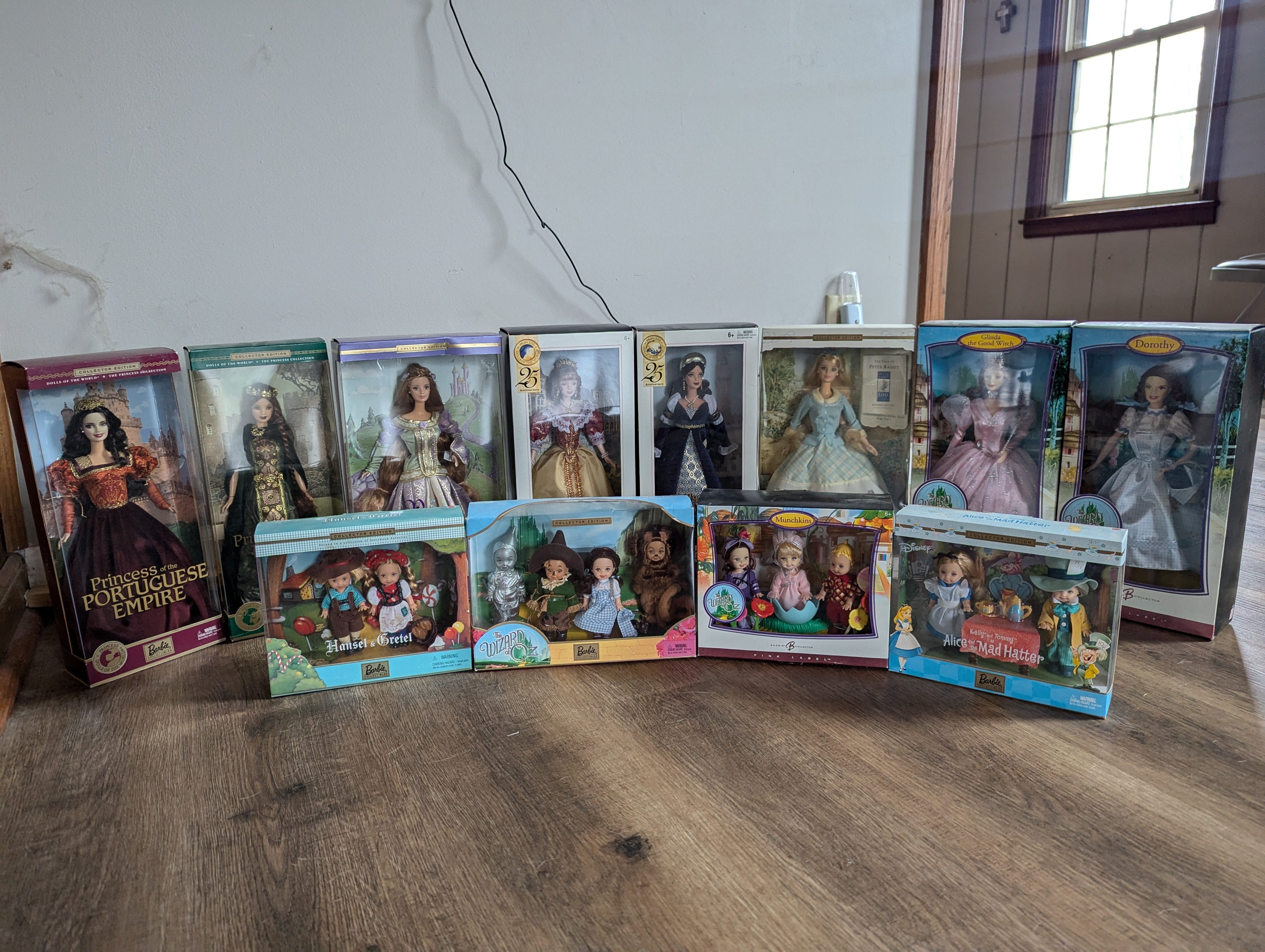
So what did I do when I graduated from college, got married, and belonged to a two income, no kids household? I fought my saving nature and gave into my desire for stuff. As a saver who married a spender, I gave into purchases of stuff we didn’t need because I was tired of saying no. After years of only having two Barbies, I started buying collector’s edition Barbies at KB Toys and Toys R Us and every other toy store that offered them at discounts. I bought new clothes and avoided any kind of pre-owned clothing.1 I convinced myself that if I was buying things on sale or on clearance, I was saving so much money, it didn’t matter whether or not I needed it or even had a place or purpose in our home. If something was cheaper than the original price and it looked like fun, I bought it.
It took years of digging out of a financial hole to realize just how bad that mindset had been for our family finances. It took several more years to realize how much damage I wasn’t just doing to my bank account, but to my personal well-being and my environment. I continue to struggle with getting rid of stuff that I don’t need that is just serving to clutter up my home, bringing me more frustration than joy.
Maybe it’s middle age. Maybe it’s a political environment that feels increasingly focused on greed and individual needs instead of the good of our communities. Maybe it’s the realization that we are polluting the earth with unnecessary junk while people struggle to feed their families and put roofs over their heads. But I’m so done with consuming.
Our value isn’t in what we own. It is in how we treat each other. It is in how we ensure people have more than their basic needs cared for. It is in how we show love for our neighbors, both those who live next to us and those around the globe who need our mercy.
I still believe that capitalism, as an economic system, has made life better for a lot of people around the globe, not just the very wealthy. But I also know that unfettered capitalism can only thrive in a world where people are constantly consuming goods they don’t need to keep the economy going.
I want to do better. I need to do better, for myself and my family.
Because I’m eager for the moment we are truly free to let the shadows give way to light and to stop disengaging from our lives and our communities. I’m eager for the freedom to come into our own, no longer owned by an economy dependent on our constant consumption. I want a better life for me and my loved ones and my neighbors, because the stuff isn’t just consuming our bank accounts, it’s consuming us.
It’s a hard habit to break, but I have to keep trying.
Support my writing
While most of my work here is free for all subscribers, it is still a labor of love that I fit into the few hours I have when I am not teaching or being an attentive wife and mom. If you want to support my writing but you do not want to commit to being a paid subscriber, please consider a one-time donation.
You can also support me by ordering my book or books from my favorite book lists at my Bookshop.org affiliate page.
Check out my RedBubble store for related merchandise.
If you want to be a regular supporter, you can upgrade your subscription from free to paid and get occasional content only for paid subscribers.
And thank you for supporting my journey 💗
A habit that continues today, even though I know I need to be better about recycling clothing for the sake of our planet.
You and I have had different journeys (my family was well-off but very dysfunctional) but wound up in a similar place. (Maybe it was RENT? I was also obsessed!)